
Roots & Winter Work
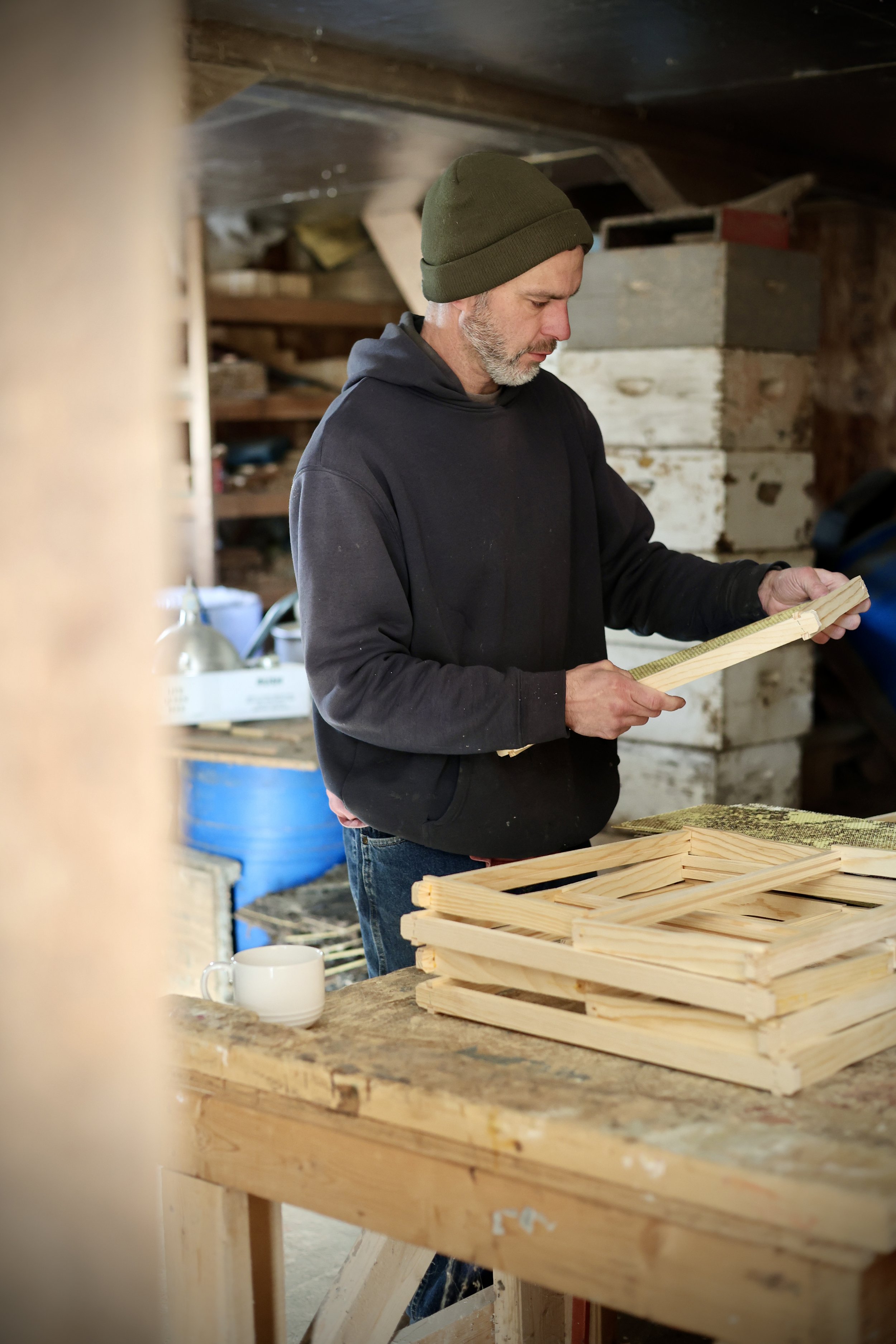
Winter on the farm has a way of slowing a person down—and that’s just how it’s meant to be.
While the bees are clustered tight in their hives, keeping one another warm, Brian spends his days in the barn tending to winter work. Mending woodenware, checking equipment, fixing what needs fixing, and caring for the tools that carry stories of their own. It’s not flashy work. It never has been. But it’s honest, steady, and necessary—especially in the quiet months when most folks assume nothing is happening on a honey farm.
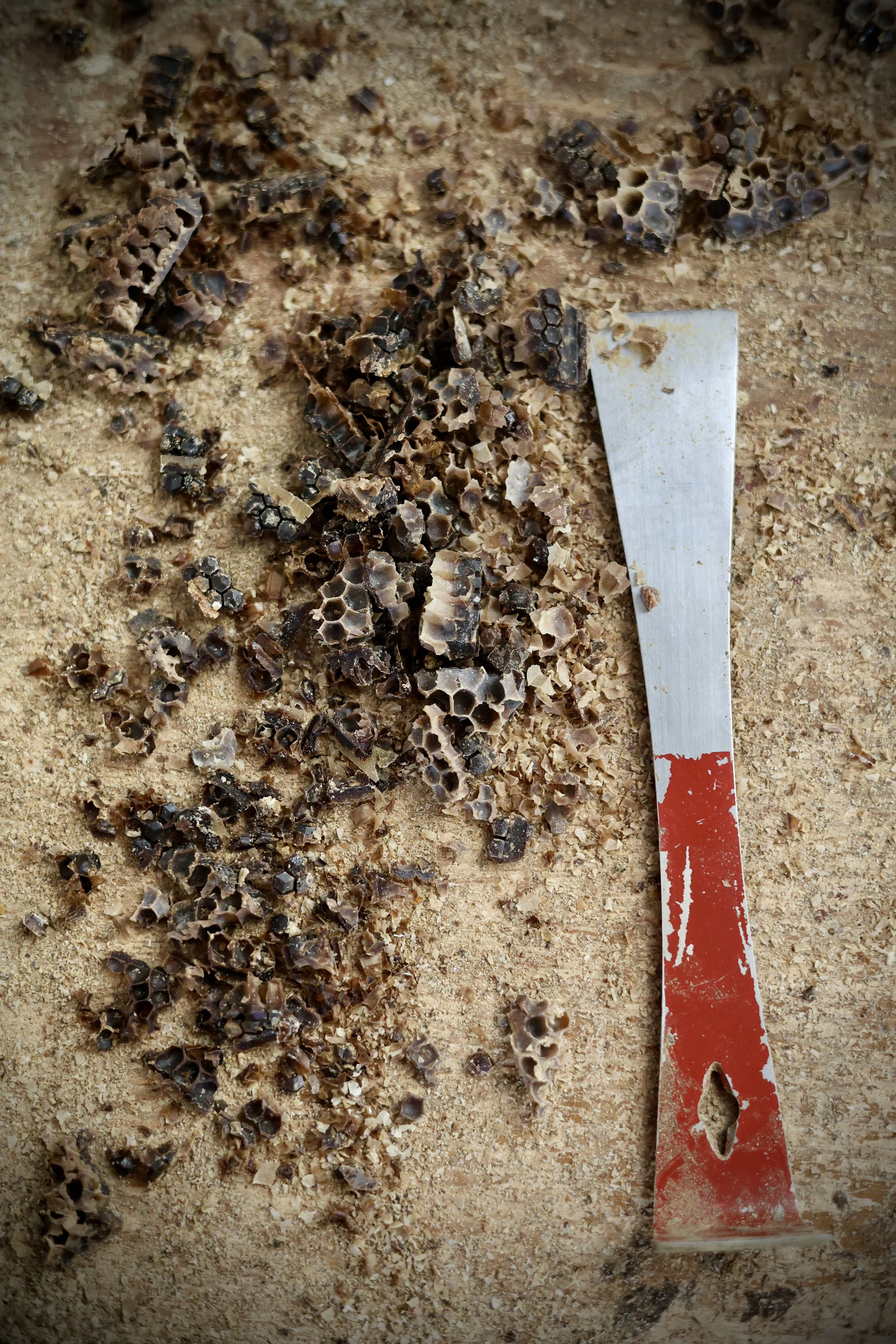
This rhythm was taught to him long before Fat Head Honey ever had a name.
Brian learned it from his dad, and from his grandpa—Sukie, short for Suchan—whose name is still stamped into old bee boxes stacked in the barn. Some of those boxes have seen well over sixty years of use. You can spot notes written right on the wood: dates, quick repairs, reminders from seasons long past. A kind of handwritten history, passed from one set of hands to the next.
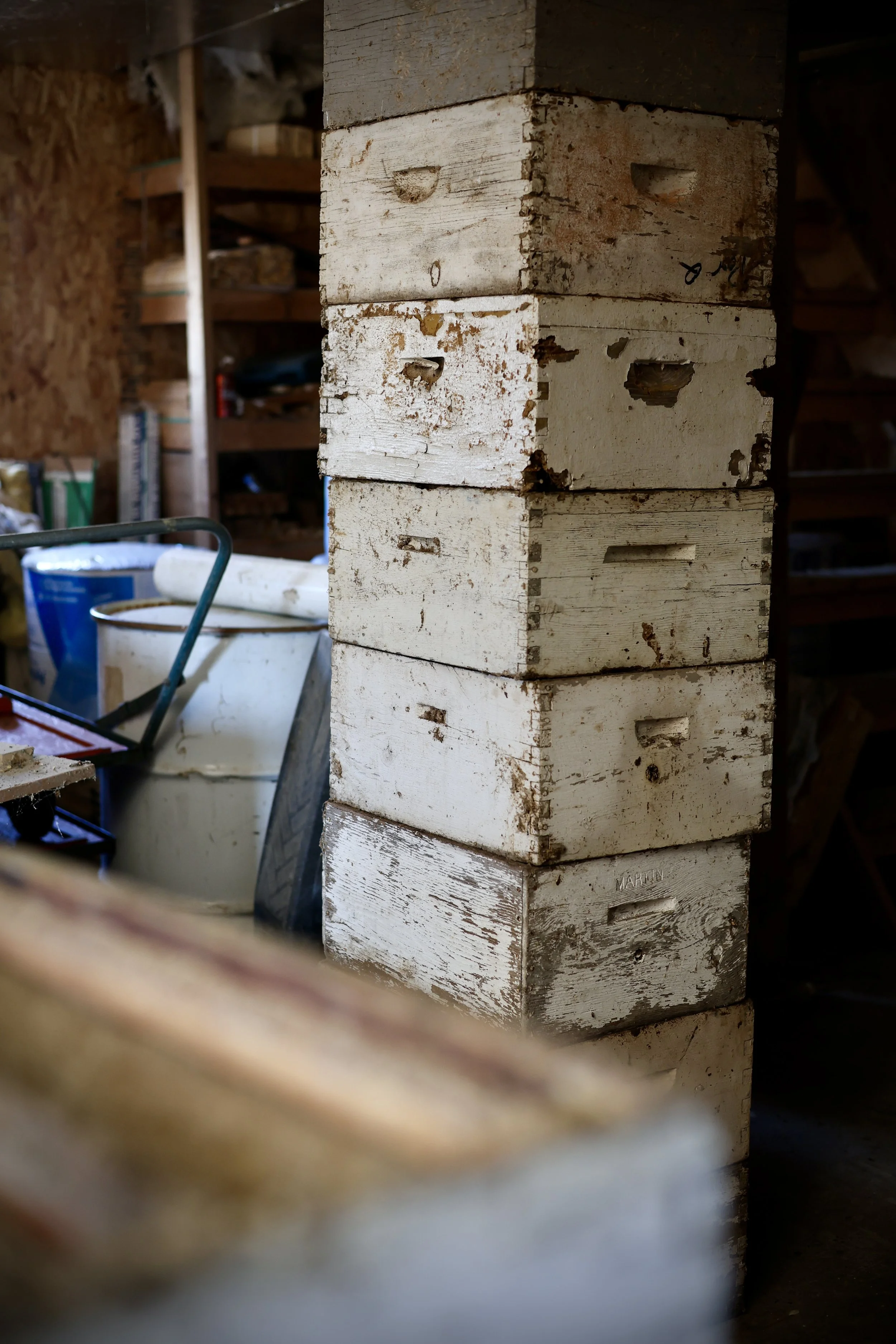
Some of these old boxes still bear “Sukie’s” name-over sixty years of work , written right into the wood.
Brian was just a tot when he started helping out—small hands, big curiosity—learning by watching, carrying, and doing. One of his favorite memories is riding along as a kid, tossing handfuls of clover seed out the truck window at stop signs and along ditches. Always planting ahead. Always thinking about forage. Always doing something, no matter how small, for the bees.
Winter was never a season of rest—it was a season of preparation. Of tending what you already had before asking it to grow again.
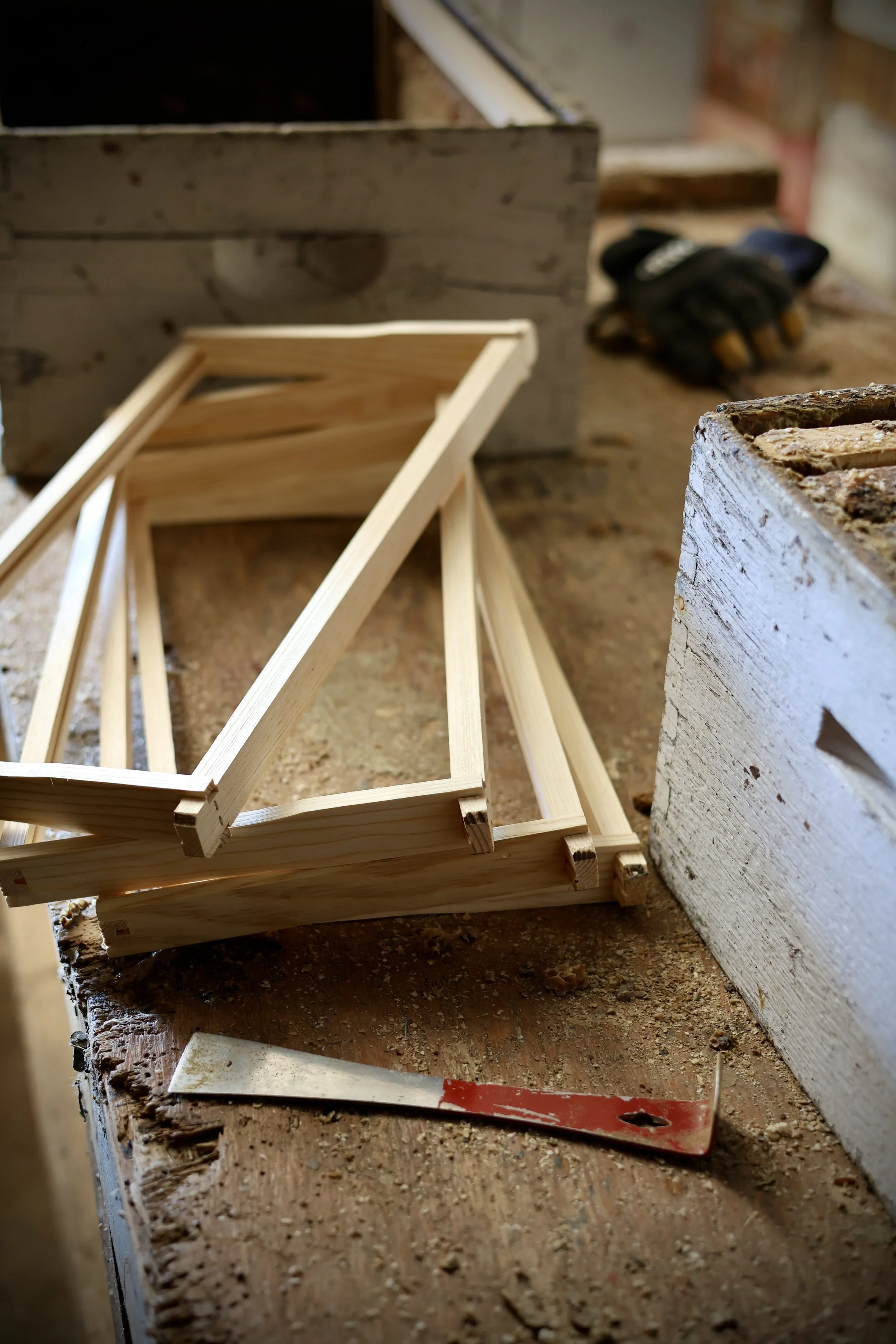
These days, not much has changed. The barn still hums with quiet purpose. The wooden boxes still get their repairs. And the bees are never far from mind, even when they’re tucked in for winter.
Spring will come when it’s ready. Until then, we honor the roots—because good honey, like anything worth waiting for, starts long before the first flower blooms.