
How Honeybees Survive Winter in Nebraska
How our honeybees survive winter in Nebraska
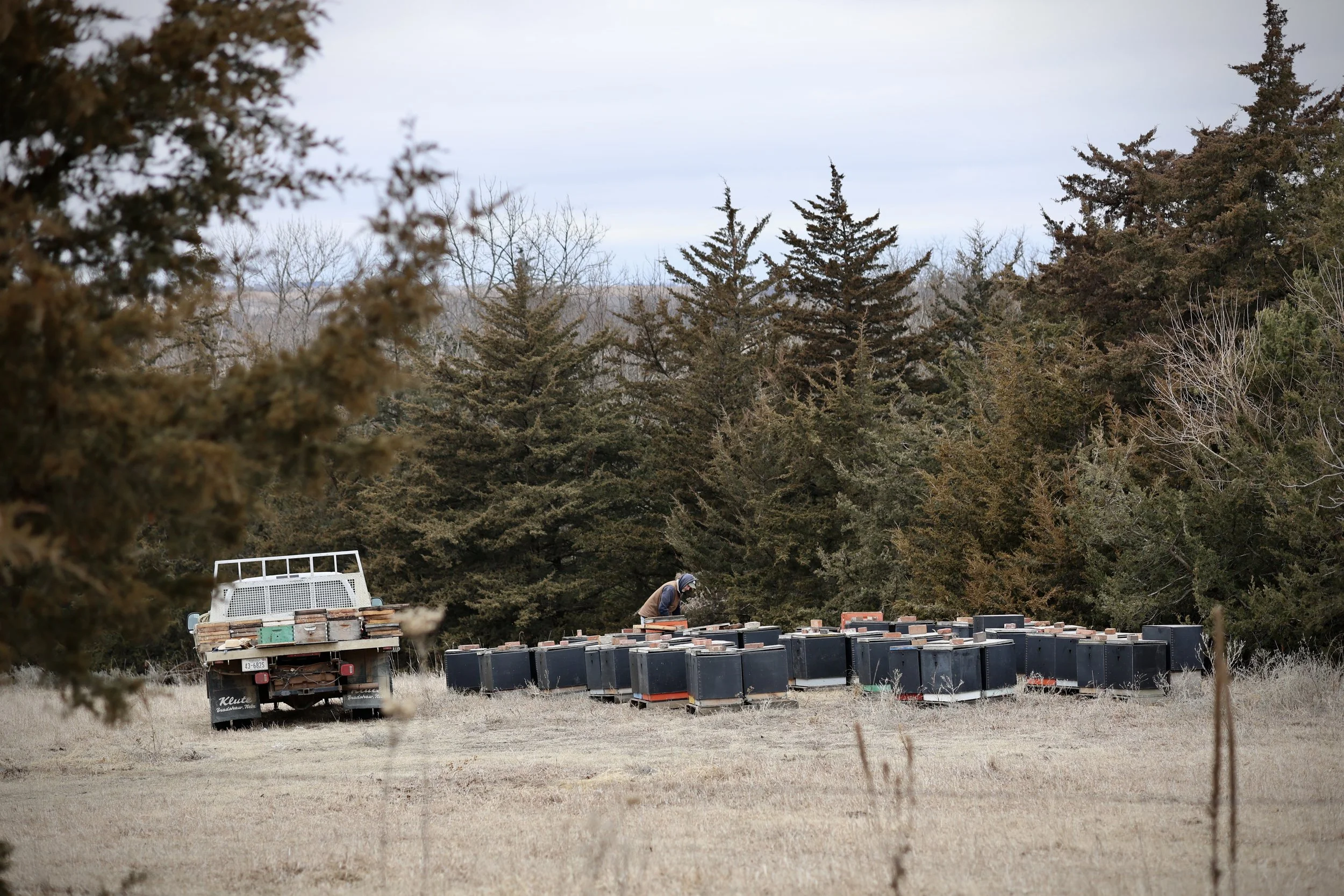
Fat Head Honey winters bees in 20+ bee yard locations across Nebraska, selected for shelter, forage and long term hive health.
When winter settles in, the bee yard can look quiet—almost still.
No buzzing. No flights in or out. Just rows of hives resting in the cold Nebraska landscape.
But inside each hive, there’s a lot going on.
Winter is one of the most important seasons in beekeeping. It’s simply less visible. This is the season of preparation, protection, and trust—where the bees do what they’ve evolved to do, and we step in only to support them.
Our bees stay in Nebraska year-round
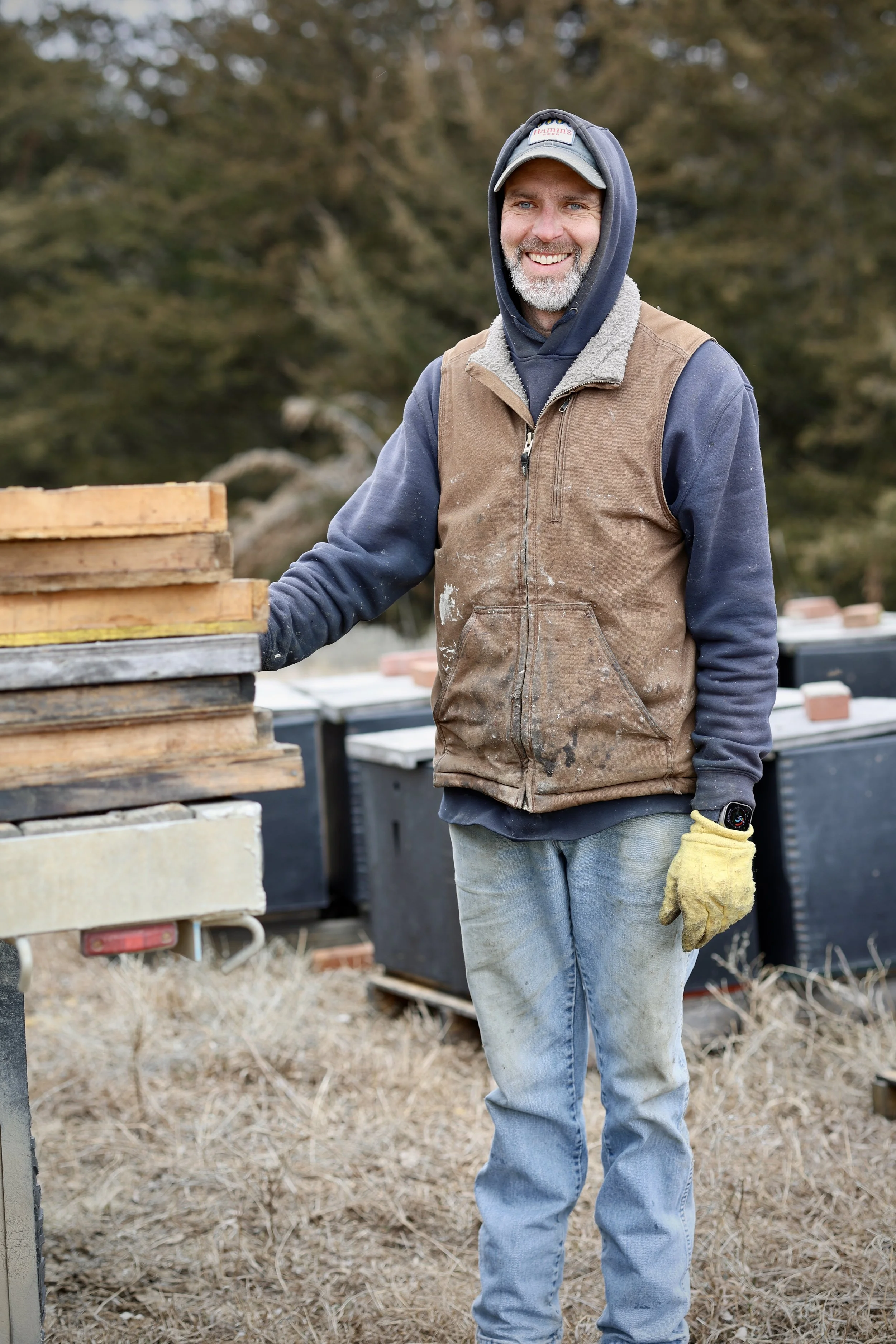
Our bees don’t migrate south for winter. They stay right here in Nebraska, where they’ve adapted to the climate, the forage, and the rhythm of long winters and short springs.
By late summer and early fall, the bees are already preparing—storing honey, raising hardy winter bees, and tightening up the hive. By the time true cold arrives, they’re ready.
Local bees, raised in local conditions, are resilient bees.
Preparing hives for a Nebraska winter
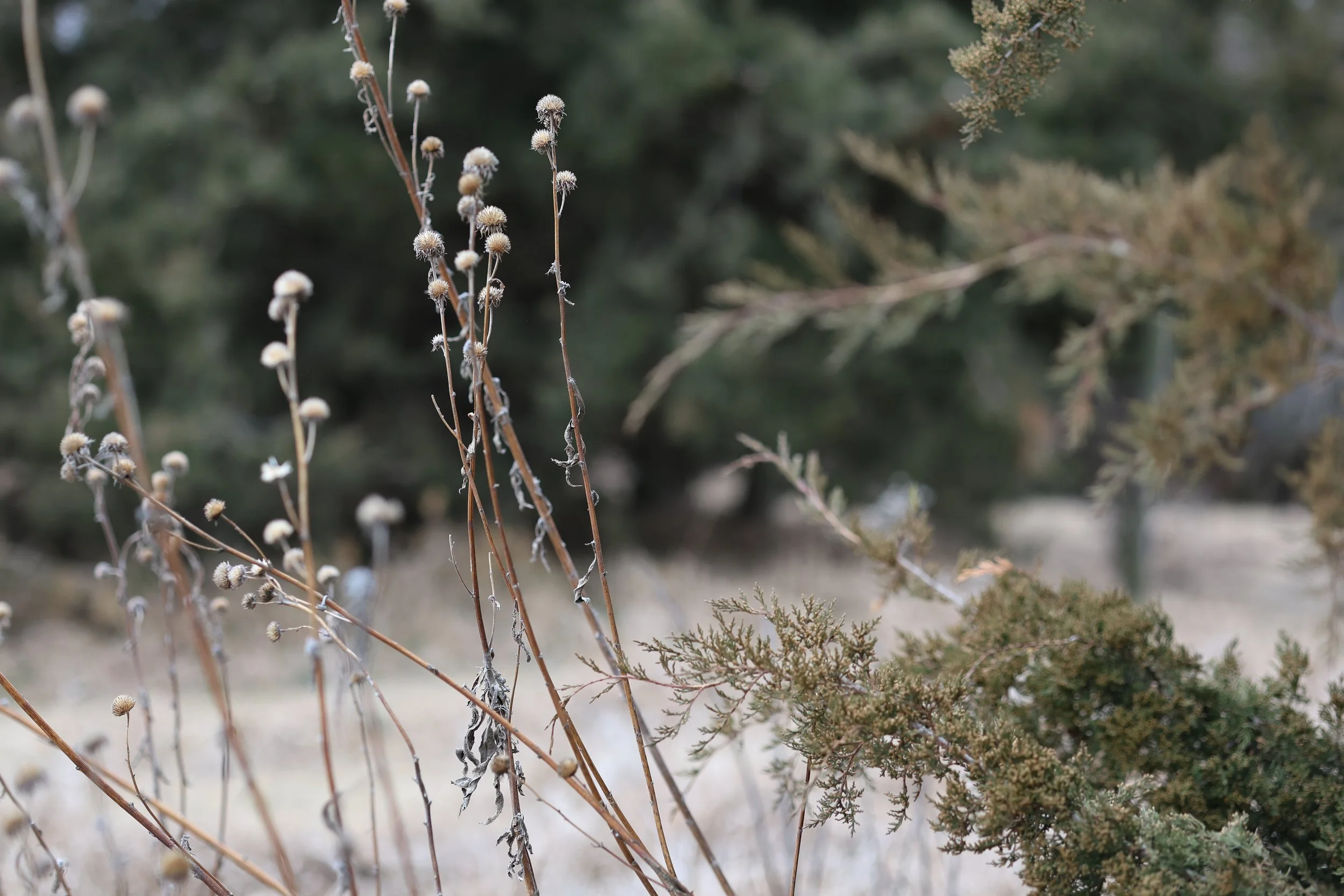
Before winter arrives, we make a few key adjustments to help the bees conserve energy and stay protected from the elements.
The hives are moved into sheltered locations, out of harsh winds and extreme exposure. Grouping hives and positioning them thoughtfully helps reduce wind chill and keeps temperatures more stable throughout the winter months.
We also focus on proper ventilation—because moisture buildup can be just as dangerous as cold.
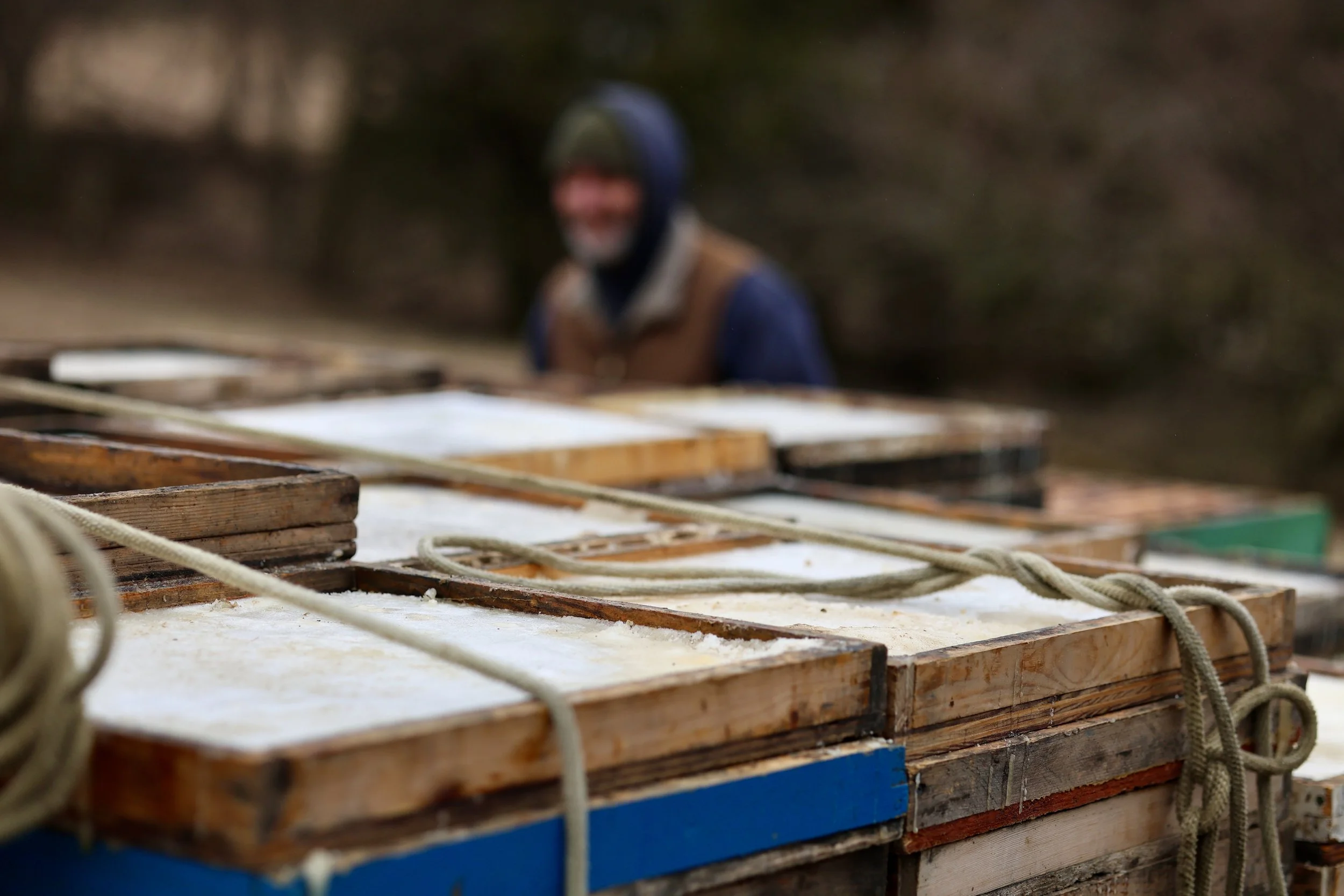
Insulating hives with black winter covers
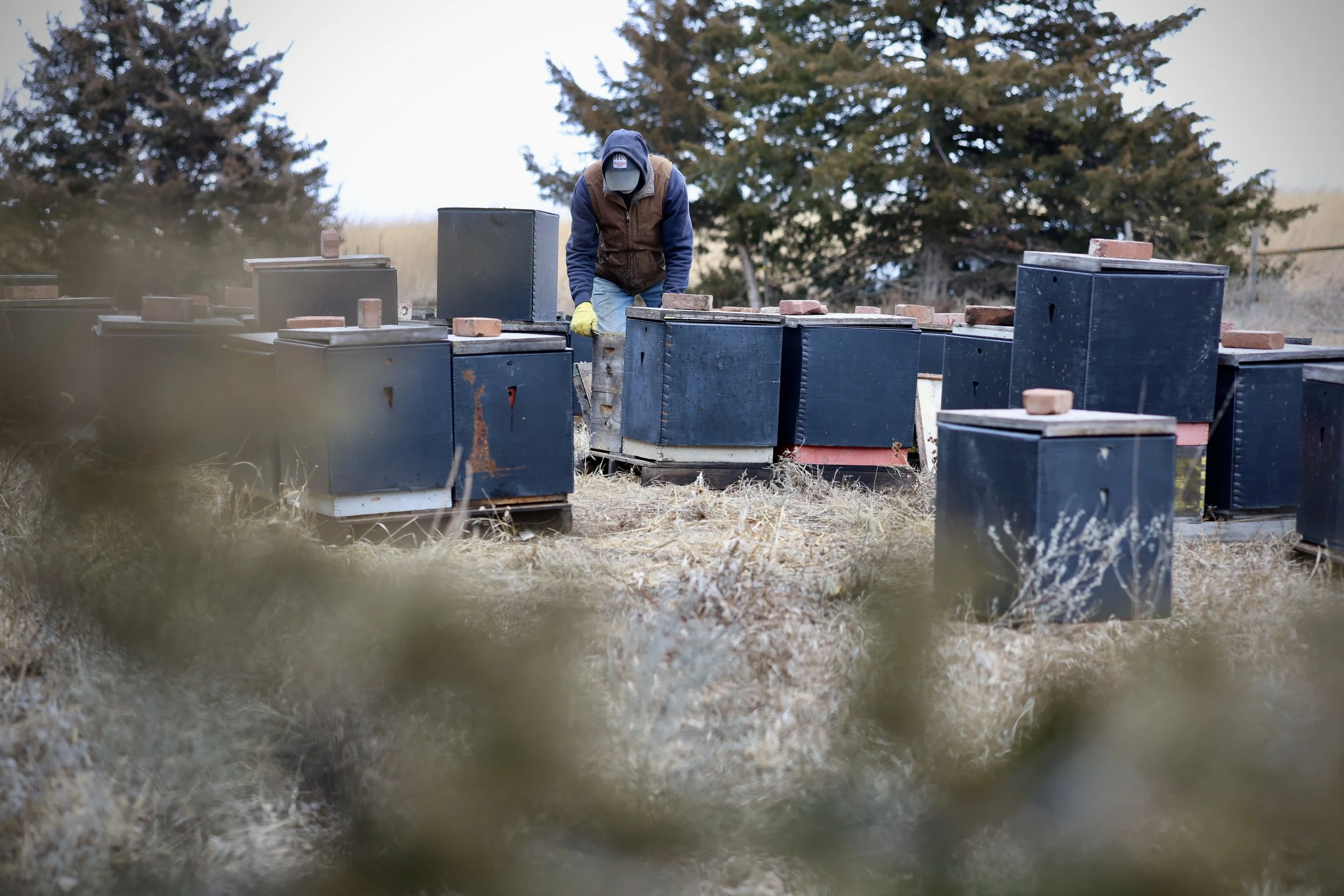
Black winter hive covers help insulate colonies and absorb sunlight on bright winter days.
As temperatures drop, we insulate the hives using black winter covers.
These covers serve two important purposes:
They add an extra layer of insulation against cold winds
The black material helps absorb sunlight, giving the hive a bit of added warmth on bright winter days
It’s a simple but effective way to support the colony without disrupting what’s happening inside.
Inside the hive: the honey bee winter cluster
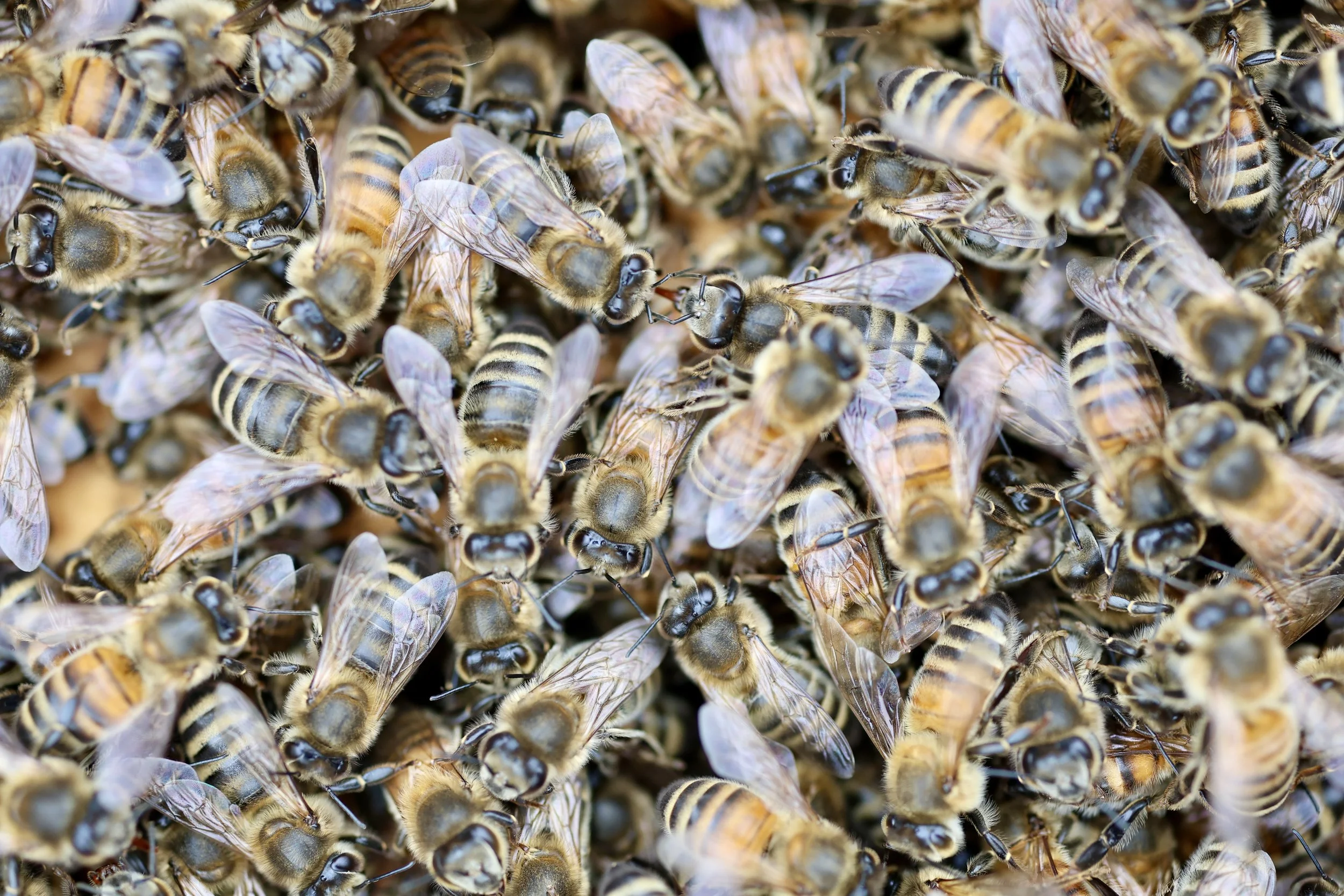
Honeybees form a winter cluster-often called the “honey bee huddle”-to generate heat and protect the queen during cold months.
When the cold sets in, honeybees form a winter cluster—often called the honey bee huddle.
The bees gather tightly around their queen, forming a living, breathing ball of warmth. By vibrating their wing muscles, they generate heat. Bees rotate from the outside of the cluster to the inside, sharing the work and protecting one another.
It’s an incredible example of cooperation—thousands of bees acting as one to survive the winter.
Honey stores: their primary winter food
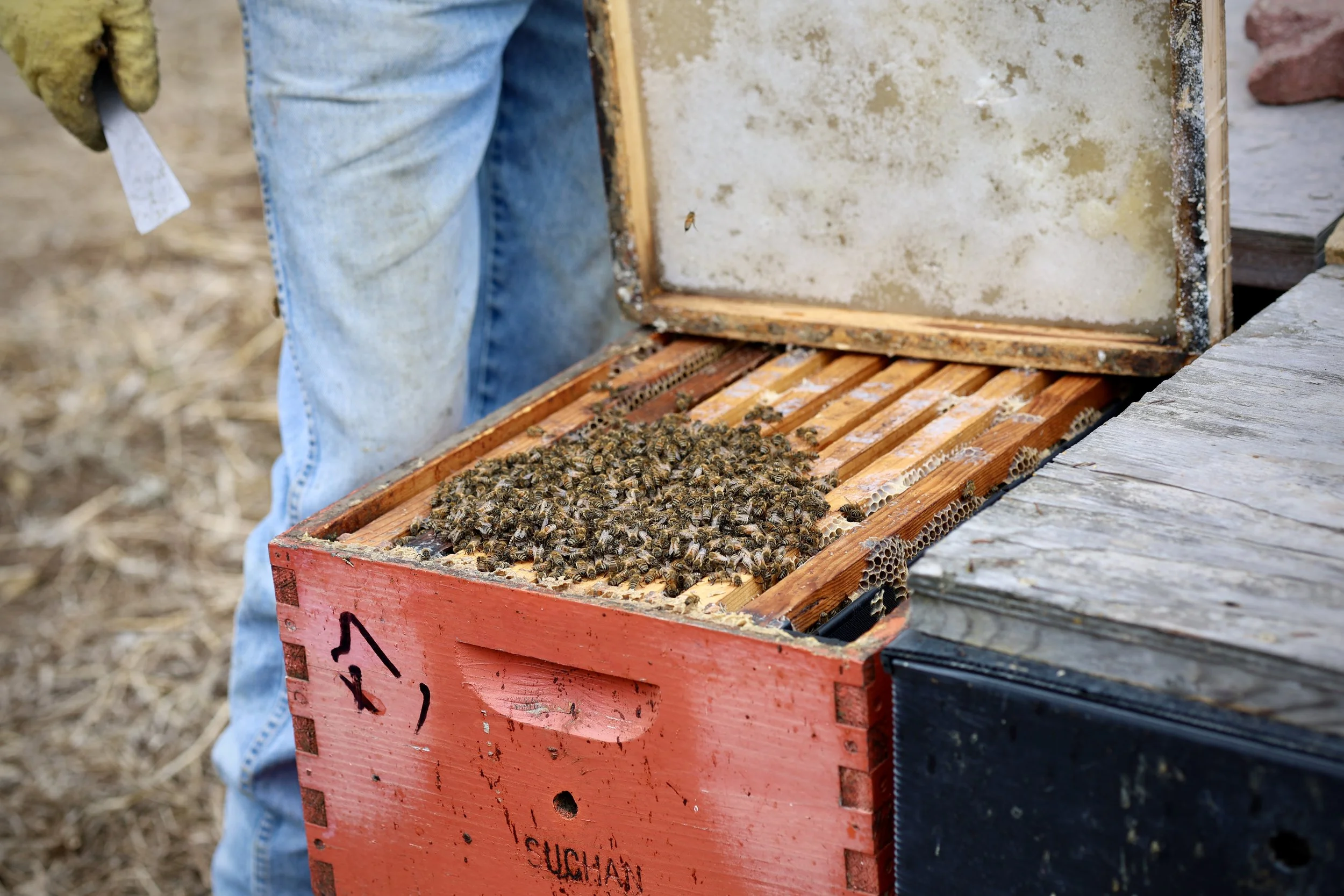
Candy boards act as an “insurance policy”providing backup energy if winter lasts longer than expected.
All of that warmth requires energy, and that energy comes from honey.
This is why we leave our bees plenty of their own honey stores going into winter. Honey is their natural fuel—what keeps the cluster alive as it slowly moves upward through the hive over the course of winter.
There are a lot of little mouths to feed inside a hive, and during long cold stretches, honey stores can be used up faster than expected.
Candy boards as a winter insurance policy
In addition to honey stores, we add candy boards as a backup—think of them as an insurance policy.
Candy boards aren’t a replacement for honey. They’re there just in case:
Winter lasts longer than usual
Cold snaps delay early spring forage
The bees burn through honey stores sooner than expected
Sometimes the bees never touch them. Sometimes they do. Either way, they offer peace of mind and extra support when it’s needed most.
Quiet winter work, watchful eyes
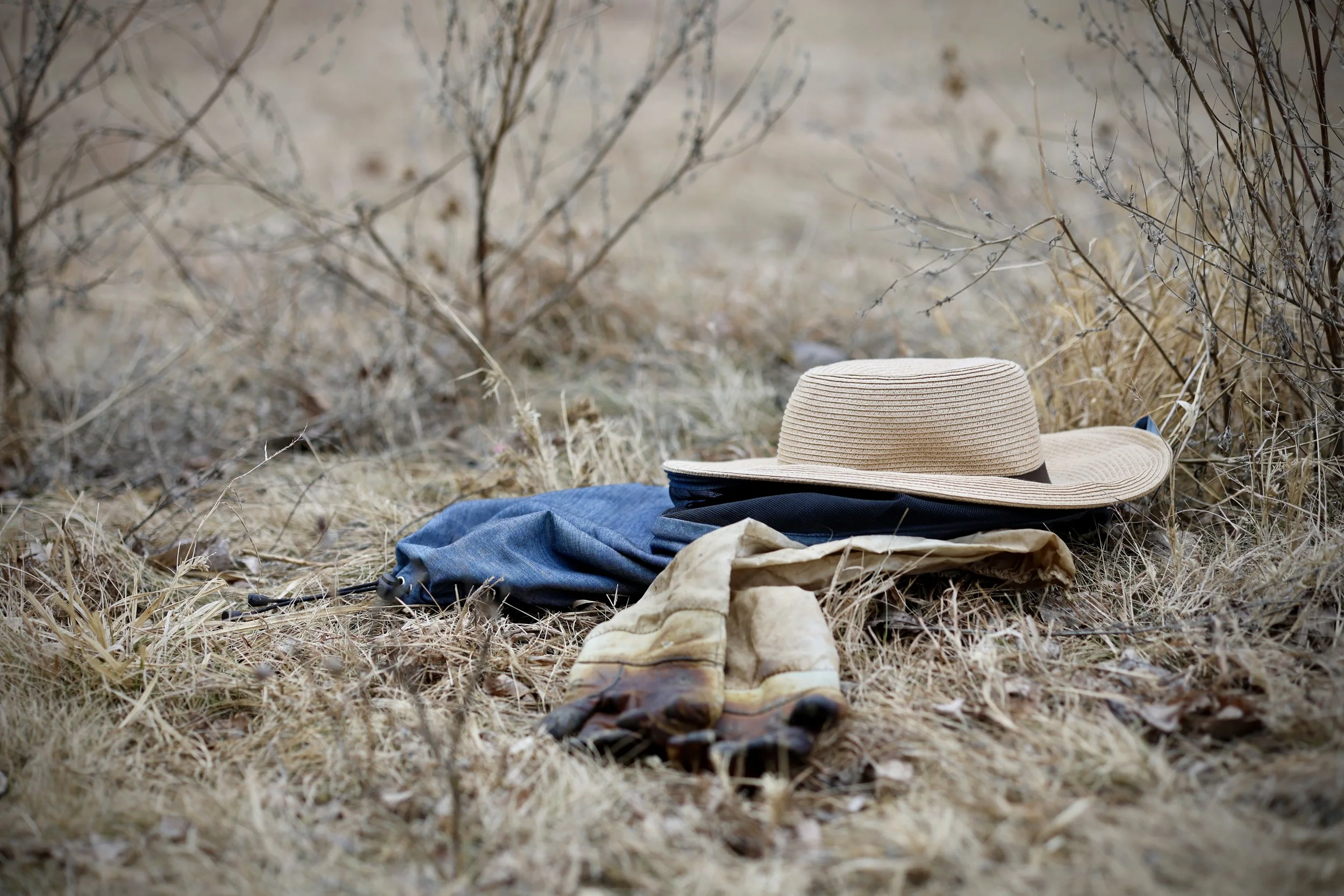
Winter is the season of watchful waiting-supporting the bees while letting them do what they do best.
Winter beekeeping is more about observation.
We check hive weight, watch weather patterns, and look for signs of healthy clusters—all while disturbing the bees as little as possible. This season is about letting them do what they’ve done for generations, while staying ready to step in if needed.
Right now, the bees are looking strong.
Waiting for spring
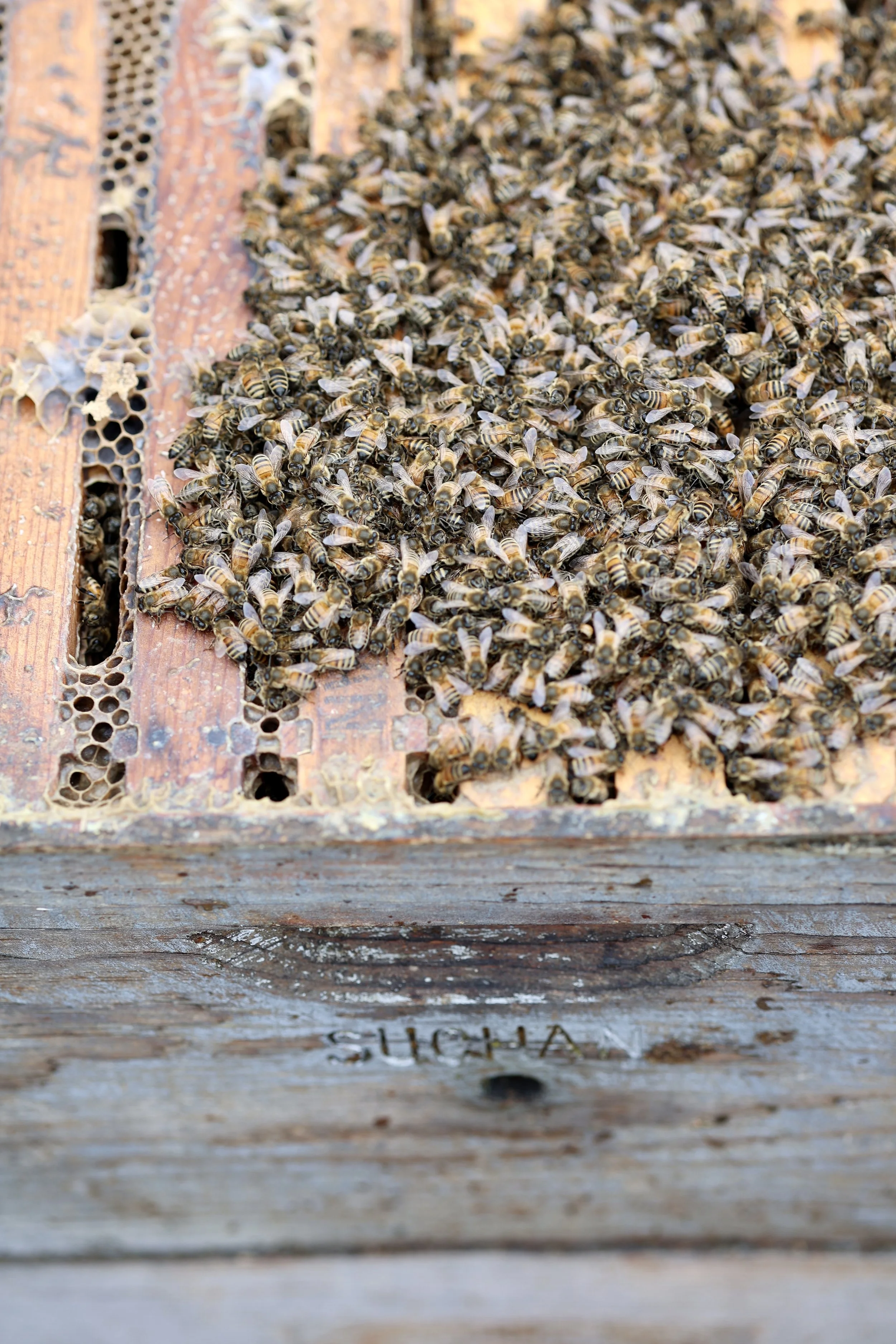
For now, the hives are settled. The bees are clustered. The land is resting.
We’ll continue keeping a close eye through the rest of winter, trusting the bees and the preparations already in place. When spring finally arrives—and it always does—the hives will be ready.